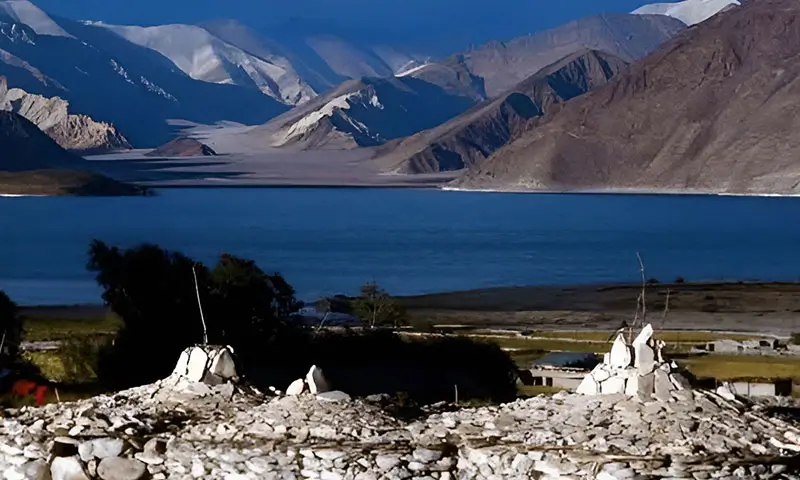
For travelers thirsty for adventure and nature at its finest, let yourself be captivated by a visit to Leh Ladakh during your Indian adventure. Here, the mountains meet the sky, the colors are more vibrant, the realm of supreme tranquility reigns, and time stands still. If you're planning a trip to Leh Ladakh, here's everything you need to know about this magical paradise for adventure lovers.
Strategically located along ancient trade routes, Ladakh is bordered by the Kunlun Mountains to the north and the Great Himalayas to the south. Ladakh takes its name from the many mountain passes that crisscross its landscape. 'La' refers to the passes and 'Dhak' means many, and it is also known as the 'land of high passes'.
Generally, the best time to plan your trip to Ladakh is from mid-May to early October.
In May : The month marks the beginning of summer in Ladakh when the temperature reaches 32°C during the day but temperatures often drop at sunset, sometimes even to zero degrees.
October marks the beginning of winter in Ladakh, with temperatures dropping below freezing. Thick blankets of snow cover the landscape, rivers and lakes freeze, and roads become difficult to navigate. In fact, the Rohtang Pass (Manali-Leh) and the Zoji La Pass (Srinagar-Leh), which connect Leh-Ladakh to other parts of India, are closed during this period.
However, there is some truly good news for adventure seekers who want to experience Ladakh's winters. The Indian government has approved a strategic road transport project designed to enhance all-weather connectivity between key areas of Jammu and Kashmir – particularly Srinagar, Kargil, and Leh.
By Air – The easiest way to get to Ladakh is to fly from Delhi or Srinagar to Leh (Kushok Bakula Rinpochee Airport – the main airport). Air India, Go Air, and Jet Airways are the three carriers that currently offer direct flights to Leh from Ladakh, which you can rely on. Schedules, however, are subject to change depending on weather conditions. Photography is strictly prohibited at the airport and on the flight to Leh for major safety reasons.
By road – Those with a more adventurous spirit might enjoy cycling or driving here. There are two main routes to Ladakh – the NH-1D and the Manali-Leh highway – but only if you travel between May and October, when the highways aren't blocked by heavy snow.
By Bus – Himachal Pradesh Tourism (CIRD) and the Jammu and Kashmir State Tourism Corporation operate both luxury and standard buses between Manali and Leh. Buses stop overnight at Sarchu or Pang camps before continuing on to Ladakh. You can contact the Ladakh Tourism Board or local guides for accurate timetables and detailed information on local and intra-regional transport options.
If you plan to drive to or travel within Ladakh, it's essential to be able to locate gas stations along the way. Remember to carry extra fuel in case you run into trouble on the highway. This is especially important if you choose the Leh-Manali route, as the last gas station on this road is in Tandi and the next one is in Karu, about 400 km away. While some shops and local homes near the roadside may have a supply of gasoline for stranded travelers in an emergency, the quality of the fuel cannot be guaranteed, and you may also need to pay extra for a premium. Once in Leh-Ladakh, buses are the cheapest form of local transport. However, hiring private taxis and using the services of a licensed tour operator are the best ways to explore this region.
A visit to Ladakh must be carefully planned and requires meticulous preparation, as well as a significant portion of the visit's duration. Be sure to bring the following documents with you when visiting Ladakh:
Domestic Line Permits – In accordance with a recent government authorization, travelers planning a trip to Ladakh are required to obtain a Domestic Line Permit to enter the restricted areas of Ladakh and a separate Protected Area Permit (PAP) from the relevant authorities before commencing their journey. To simplify the process, the Indian government has established an online application portal (http://lahdclehpermit.in/) to facilitate the acquisition of these permits.
Protected area permits are issued for a maximum of seven days, and inland access permits are valid for a maximum of three weeks. All visitors must carry valid photo identification and proof of nationality at all times in case of emergency. Keep several copies of these documents, as they will be required at the various checkpoints manned by military personnel who track traveler entries and exits.
The rugged terrain, harsh climate, and challenging environment can make tourism in Ladakh seem daunting, but the warm hospitality of the local people makes it less intimidating. Ladakh offers a variety of accommodation options, from budget hostels and homestays to campsites, guesthouses, and luxury hotels. Most hotels in Ladakh offer modern amenities and stunning views, while most guesthouses are family-run businesses that provide a more informal setting.
There are many options available for must-see activities and things to do in Ladakh. Discover the cultural depth of Leh by visiting its countless monasteries, palaces, and museums, or simply explore its unparalleled natural beauty.
Stroll through the captivating Leh Palace.
The Leh Palace stands majestically amidst the city's narrow lanes and bustling markets, built in a traditional Tibetan architectural style. This nine-story palace was once home to the royal family (who still own it). Part of the palace has been converted into a museum and displays thangkas, paintings, and medieval weapons.
Leh-Ladakh boasts a number of monasteries, each built in its own unique style. Without a doubt, include the Thiksey and Hemis monasteries on your Ladakh itinerary. Thiksey is one of the best-preserved and most colorful monasteries, while Hemis is the oldest and most admired in Ladakh. Hemis has also become popular thanks to its annual festivals and vibrant dance performances that coincide with the summer tourist season.
Retrace ancient tourist routes with a yak safari or ride Bactrian double-humped camels across the white sand dunes of Hunder and along the stunning Shyok Valley and the Nubra River. Adrenaline junkies can enjoy adventure sports, trekking, whitewater rafting, cycling, and mountaineering.
And if all that isn't magical enough, head up the mysterious Magnetic Hill, located 30 kilometers from Leh, on the road to Alchi and Kargil. A sign invites you to stop your car on a white square marked on the road, turn off the engine, and leave it in neutral. The strong magnetic pull emanating from the hill mysteriously makes the car roll uphill, a phenomenon that fascinates visitors.
While Leh's beauty makes it easy to fall in love, the surrounding areas of Leh and Ladakh truly captivate travelers. Here are some of the most popular places to visit in Ladakh –
The shimmering waters of the Shyok and Nubra rivers lend the Nubra Valley a distinctly ethereal charm. Located approximately 140 kilometers from Leh, the Nubra Valley is carpeted with vibrant green alfalfa, wildflowers, and lavender.
The Nubra Valley is home to Hundert, one of the highest desert areas in the world. This region is renowned for its crystalline white sand dunes and its rare two-humped camel. Choose to retrace ancient travel routes with a camel safari or indulge in adventure sports, hiking, rafting, cycling, and climbing.
One of the best places to visit in Ladakh is the spectacular Pangong Tso Lake, known worldwide as the 'Lake of 1001 Colors'. Nestled in rugged, craggy mountains at an altitude of 4,350 meters, it is the highest saltwater lake in the world. Spend the night camping on the lake's white sands and watch the water's color shift, changing through various hues such as blue, green, purple, and turquoise, then a deep violet, depending on the angle.
A visit to Ladakh would be incomplete without a trip to the Zanskar Valley. The journey to Zanskar takes you through an almost otherworldly, lunar landscape, beyond Kargil and onto the wild and untamed Zanskar River. Also known for whitewater rafting, the riverbanks reveal ancient rock carvings for those who wish to explore them.
Perched on the banks of the mighty Indus River lies the charming village of Alchi, located about 70 km west of Leh. Stroll along its winding streets, past village houses surrounded by apricot trees. Let the gentle murmur of the Indus accompany you as you explore Alchi's gompas and temples.
Ladakh adds a unique charm with its many picturesque roadside shops and stalls, offering curiosities, jewelry, pashmina wool, art, and handicrafts. Don't miss the main bazaars, where you'll find small statues, Buddha images and beautiful paintings, replicas of spinning prayer wheels, and other arts and crafts. The Tibetan market on Fort Road is also famous for its traditional Ladakhi silver and turquoise jewelry, Ladakhi clothing, and much more.
Ladakh is an exceptionally beautiful landscape, with its rugged mountains contrasting against a striking blue sky reflected in the calm, clear waters of the many lakes that dot the countryside. A tour of Ladakh offers an adventure, a profoundly spiritual experience, and touches your soul like no other place on Earth can. It's a place you should visit at least once in your life, so be sure to add it to your travel bucket list.